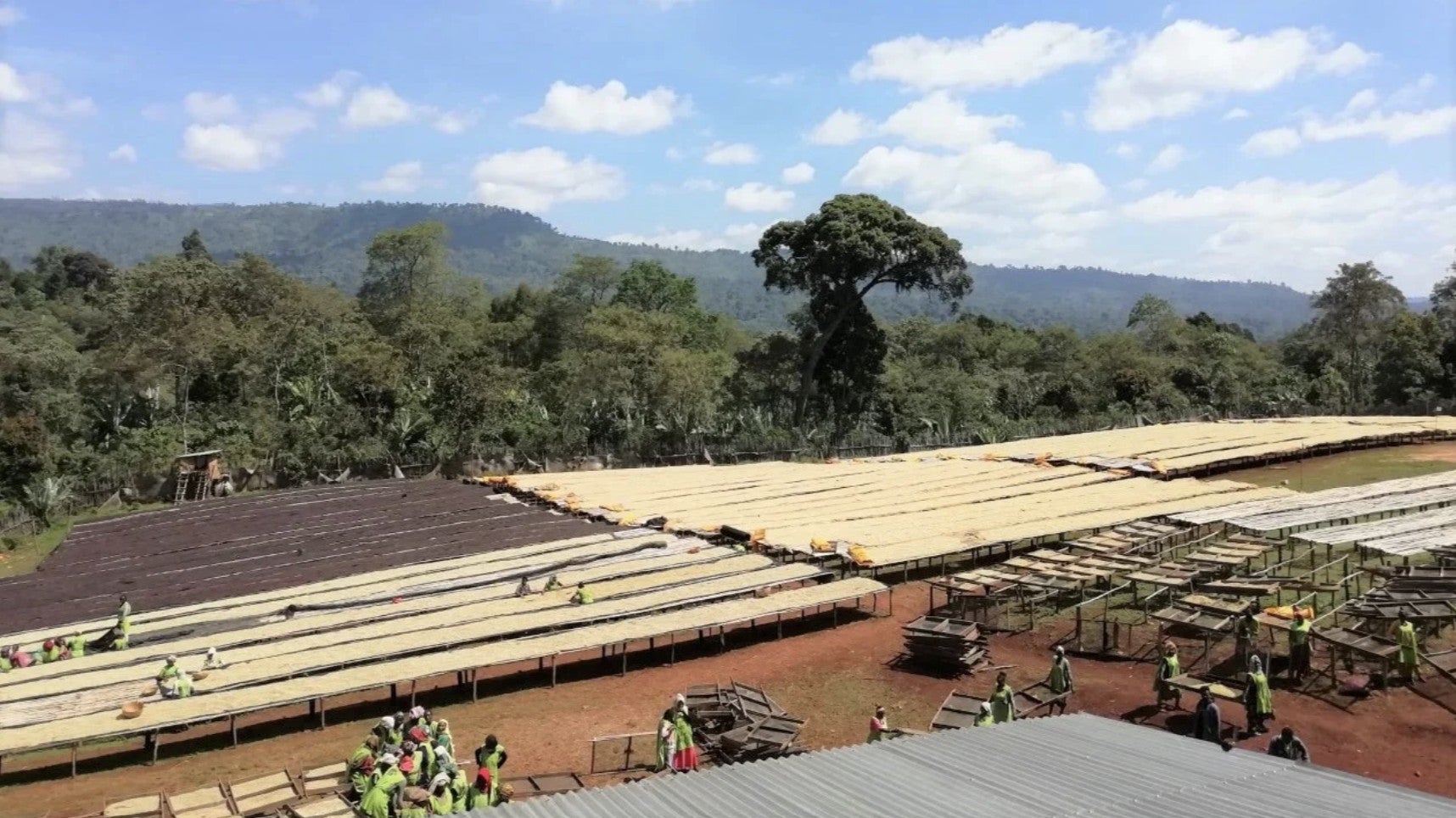
Ethiopia is where coffee began. The plant Coffea arabica originated in the forests of southwestern Ethiopia, and the country remains the genetic heartland of the species — home to thousands of wild and heirloom varieties found nowhere else on earth. For specialty coffee, Ethiopia is singular: no other origin offers the same breadth of flavor, from delicate jasmine florals to explosive blueberry fruit bombs.
Major growing regions
- Yirgacheffe — The most celebrated sub-region, producing washed coffees with jasmine, bergamot, and stone fruit. Elevation: 1,700-2,200m.
- Sidamo (Sidama) — Broader region surrounding Yirgacheffe with diverse microclimates. Citrus and berry notes. Both washed and natural lots.
- Guji — Southern region gaining recognition for exceptional naturals. Blueberry, tropical fruit, wine-like complexity.
- Harrar — Eastern highlands producing exclusively natural-processed coffees. Wild berry, dried fruit, chocolate.
- Limu & Jimma — Western regions with more balanced, rounded profiles. Spice, brown sugar, mild fruit.
What makes Ethiopian coffee distinctive
Ethiopia’s genetic diversity is its greatest asset. While most coffee-producing countries grow a handful of named varieties, Ethiopian coffees are typically labeled “heirloom” — a catch-all for the dozens or hundreds of unnamed local landraces growing on a single farm. This genetic complexity contributes to the extraordinary range of flavors found across the country.
Processing
Both washed and natural processing are widespread. Washed Ethiopian coffees tend toward floral, citrus, and tea-like profiles, while naturals lean into berry, tropical fruit, and wine. The choice of process dramatically shapes the final cup.
In the cup
- Washed — jasmine, lemon, peach, Earl Grey tea, delicate body
- Natural — blueberry, strawberry, tropical fruit, heavy body, wine-like
- Elevation ranges from 1,400m to 2,400m, with the highest lots producing the most complex acidity